POVODOM 10 GODINA OD OSNIVANJA NAJAVLJUJEMO NOVI POZIV ZA STAŽIRANJE KAO I OBELEŽAVANJE 2027 – „GODINE GODIŠNJICA“ SERIJOM DOGAĐAJA
POZIV ZA STAŽIRANJE U SUSB Strukovno udruženje sektora bezbednosti povodom deset godina od svog osnivanja organizuje novi, šesti po redu, ciklus stažiranja za studente osnovnih, master i doktorskih studija kao i Pročitajte ceo tekst.

POZIV ZA STAŽIRANJE U STRUKOVNOM UDRUŽENJU SEKTORA BEZBEDNOSTI 2026/2027
Strukovno udruženje sektora bezbednosti (SUSB) povodom deset godina od svog osnivanja organizuje novi, šesti po redu, ciklus stažiranja za studente osnovnih, master i doktorskih studija kao i niz aktivnosti kojim se kroz Pročitajte ceo tekst.
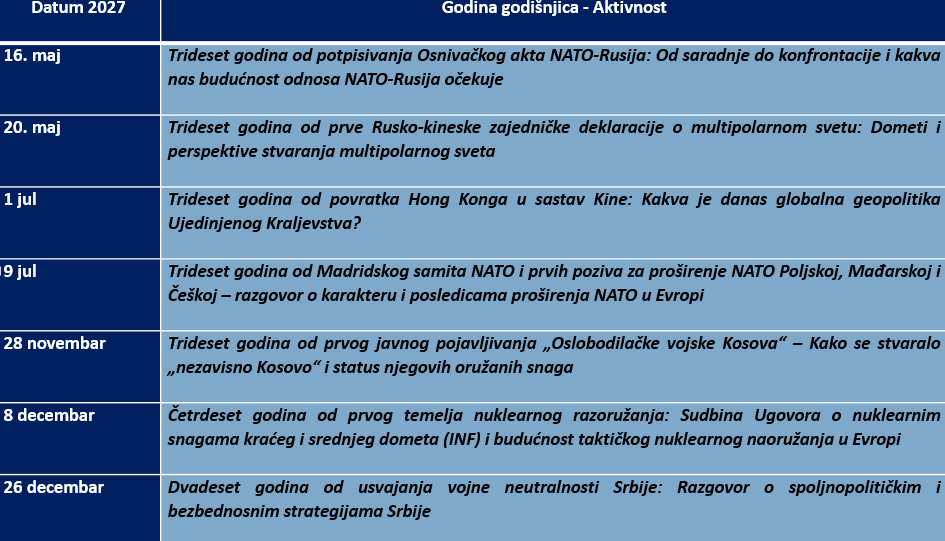
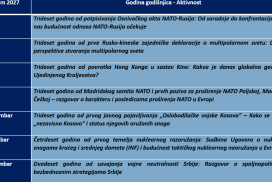
2027. GODINA – GODINA GODIŠNJICE U SUSB-u
Strukovno udruženje sektora bezbednosti povodom deset godina od svog osnivanja organizuje novi, šesti po redu, ciklus stažiranja za studente osnovnih, master i doktorskih studija kao i niz aktivnosti kojim se kroz obeležavanje Pročitajte ceo tekst.
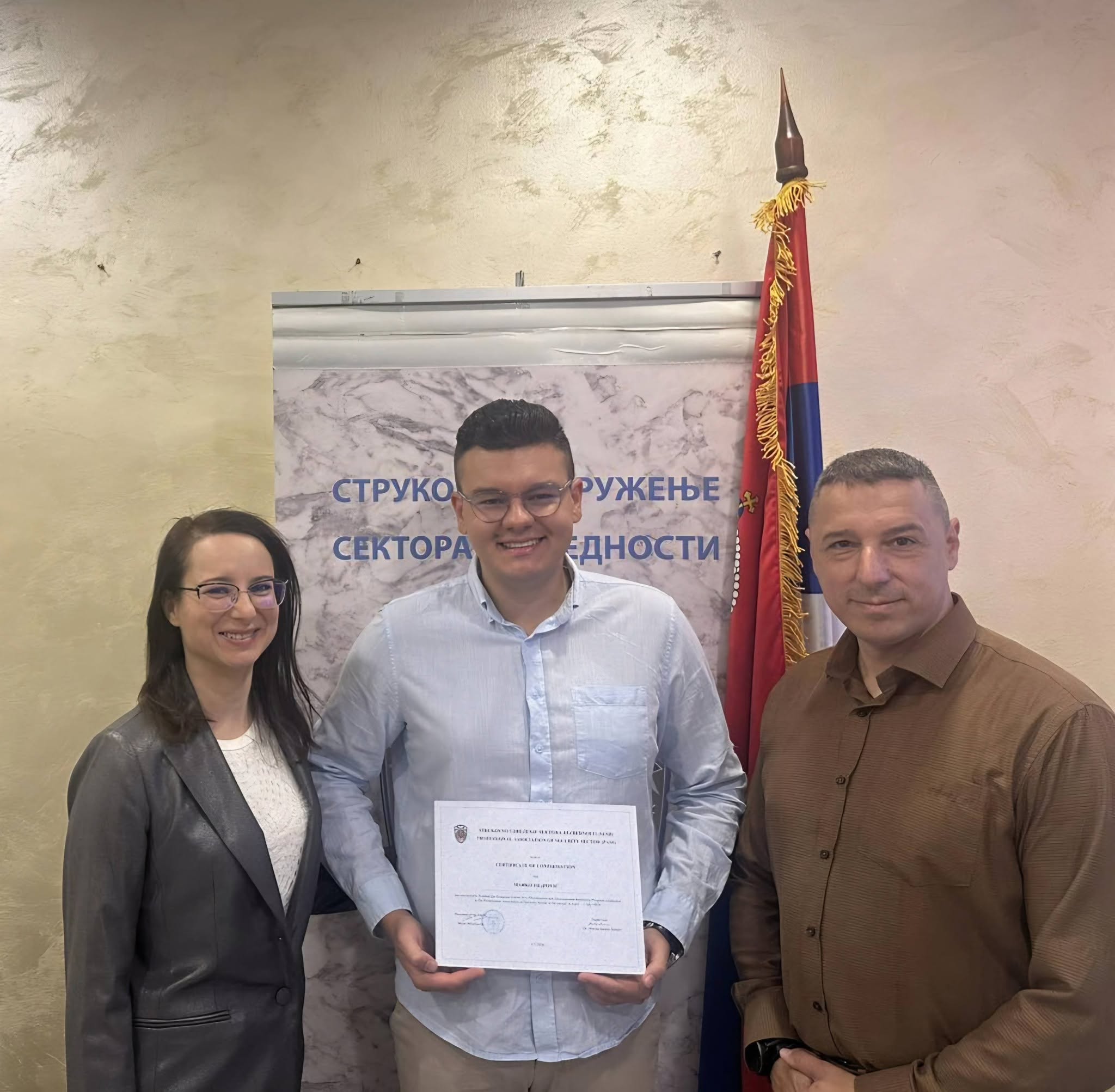
U SUSB-u završeno peto EU stažiranje za neproliferaciju i razoružanje
U Strukovnom udruženju sektora bezbednosti uspešno je završeno peto EU stažiranje za neproliferaciju i razoružanje sa našim stažistom Markom Filipovićem, studentom master studija Fakulteta političkih nauka Univerziteta u Beogradu. Tema ovog Pročitajte ceo tekst.
SARADNJA ZEMALJA NEMAČKOG GOVORNOG PODRUČJA U OBLASTI UPOTREBE SVEMIRA
Autor: Dušan Radenković Prošlog ponedeljka ministri odbrane četiri evropske zemlje nemačkog govornog područja (Nemačka, Austrija, Švajcarska i Luksemburg) održali su sastanak i obavezali se na čvršću saradnju u oblasti svemira, posebno satelita Pročitajte ceo tekst.

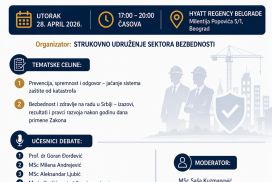
Uspešno realizovana Debata – Okrugli sto 28.04.2026. u poslovnom prostoru, maloj Sali, SUSB-a na adresi Hyatt Regancy hotel, Beograd, ul. “Milentija Popovića” br. 5/1
Povodom ovogodišnjeg Dana zaštite od katastrofa i Međunarodnog dana bezbednosti i zdravlja na radu, Strukovno udruženje sektora bezbednosti organizovalo je Debatu – Okrugli sto 28.04.2026. u poslovnom prostoru, maloj Sali, SUSB-a Pročitajte ceo tekst.

U susretu predloga izmena i dopuna novog Porodičnog zakona u Republici Srbiji
Na prvo čitanje i praćenje primedbi ali i iskustvo u praksi, kako u praktičnim primenama zakona kod nas tako i prirode procesa donošenja zakona u Republici Srbiji, stava smo da pre bilo Pročitajte ceo tekst.
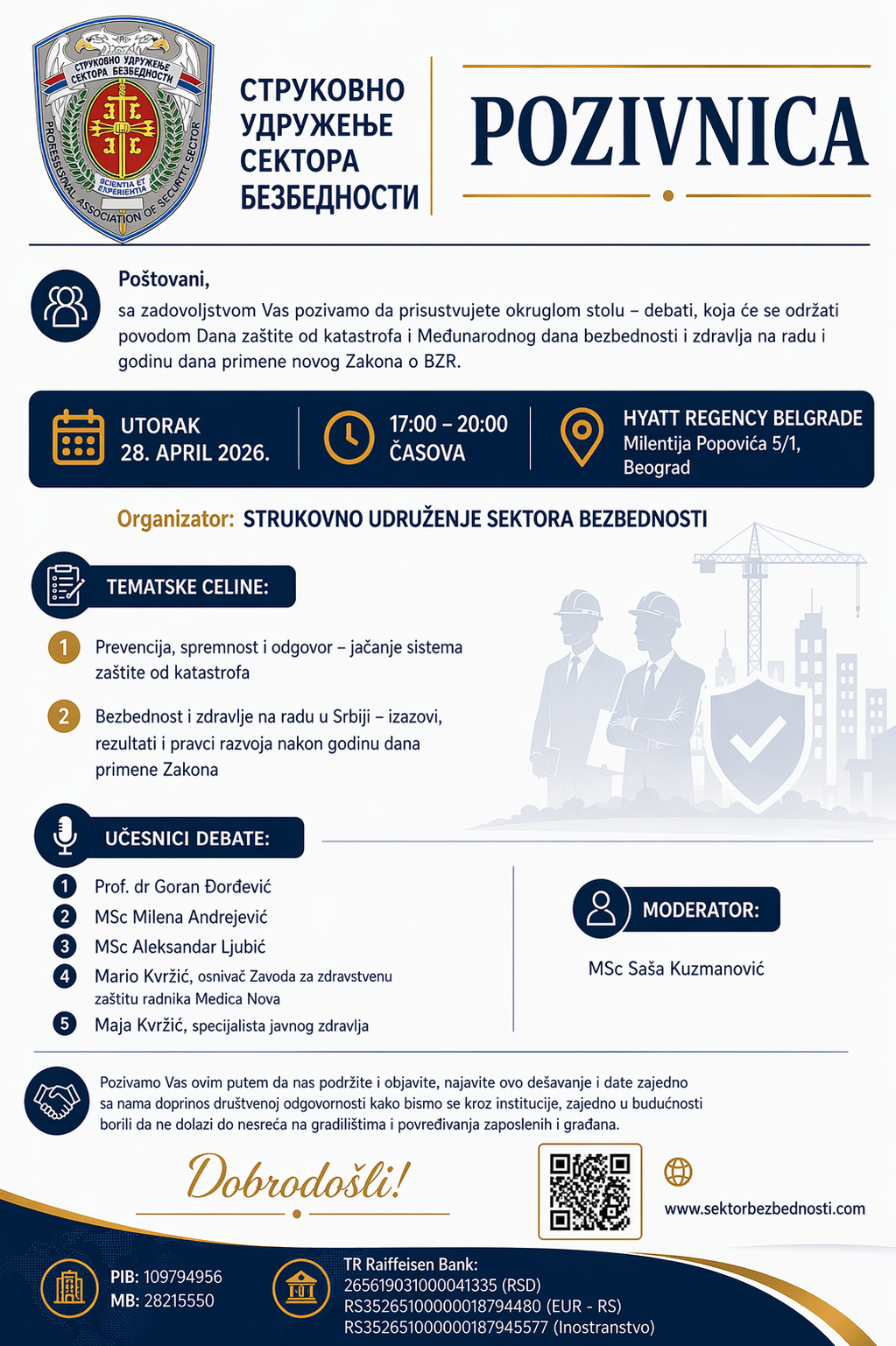
SUSB organizuje stručnu diskusiju u susret međunarodnim danima BZR i zaštite od katastrofa 28.04.’26.god.
MSc. Saša Kuzmanović, maš. inž. Predstavnik radionice za pitanja bezbednosti i zdravlja na radu u SUSB Pročitajte ceo tekst.
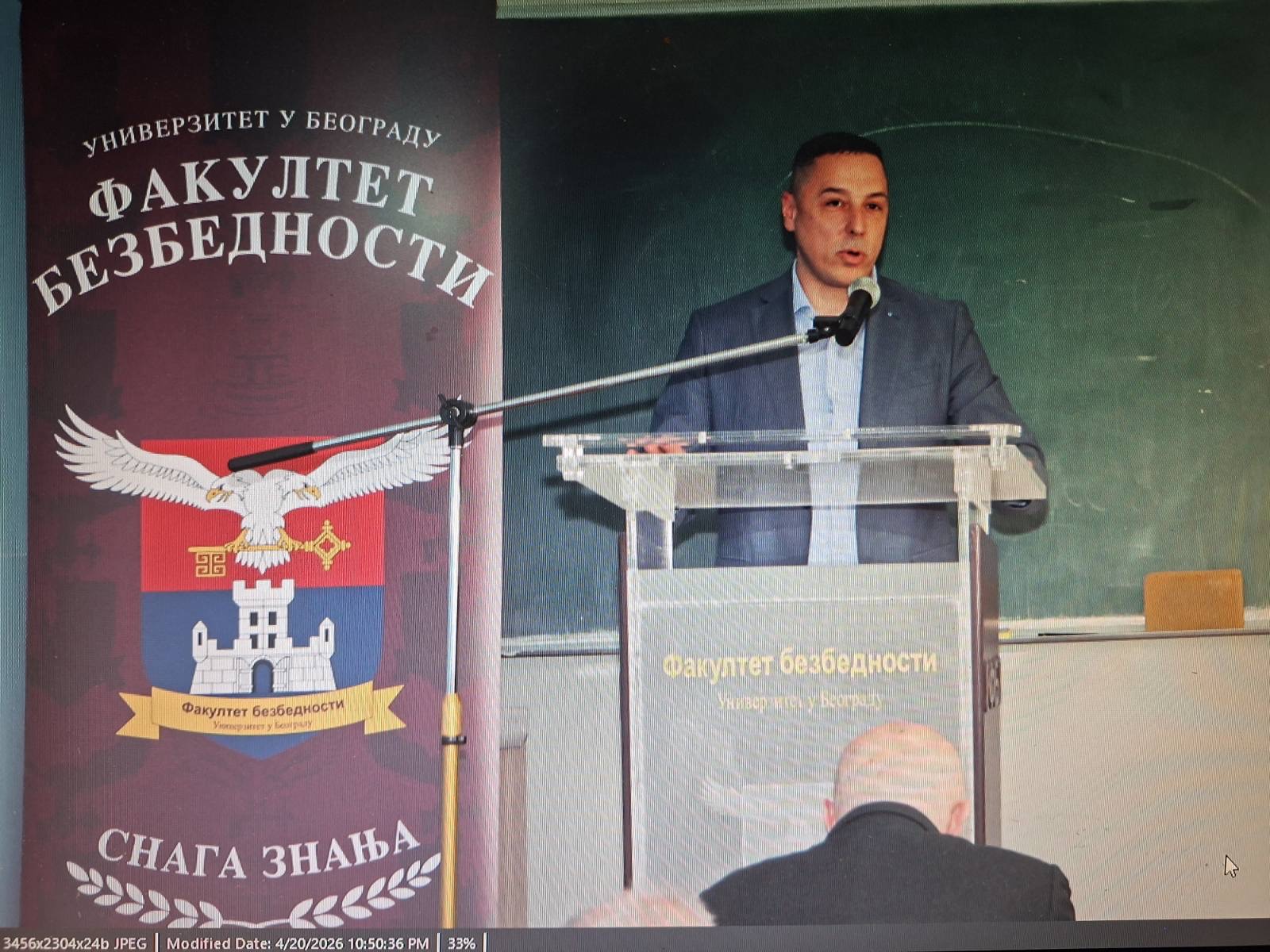
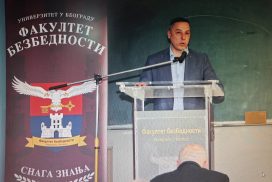
SUSB na Fakultetu bezbednosti u Beogradu podržalo Inicijativu za uvođenje nastavnog predmeta “Bezbednosna kultura” u škole u Srbiji
Strukovno udruženje sektora bezbednosti (SUSB) obavešteno je i kontaktirano od strane pokretača inicijative za uvođenje predmeta „Bezbednosna kultura“ u obrazovni sistem Republike Srbije, prof. Mileta Spasića, ispred Fakulteta bezbednosti. Prepoznajući značaj ove Pročitajte ceo tekst.
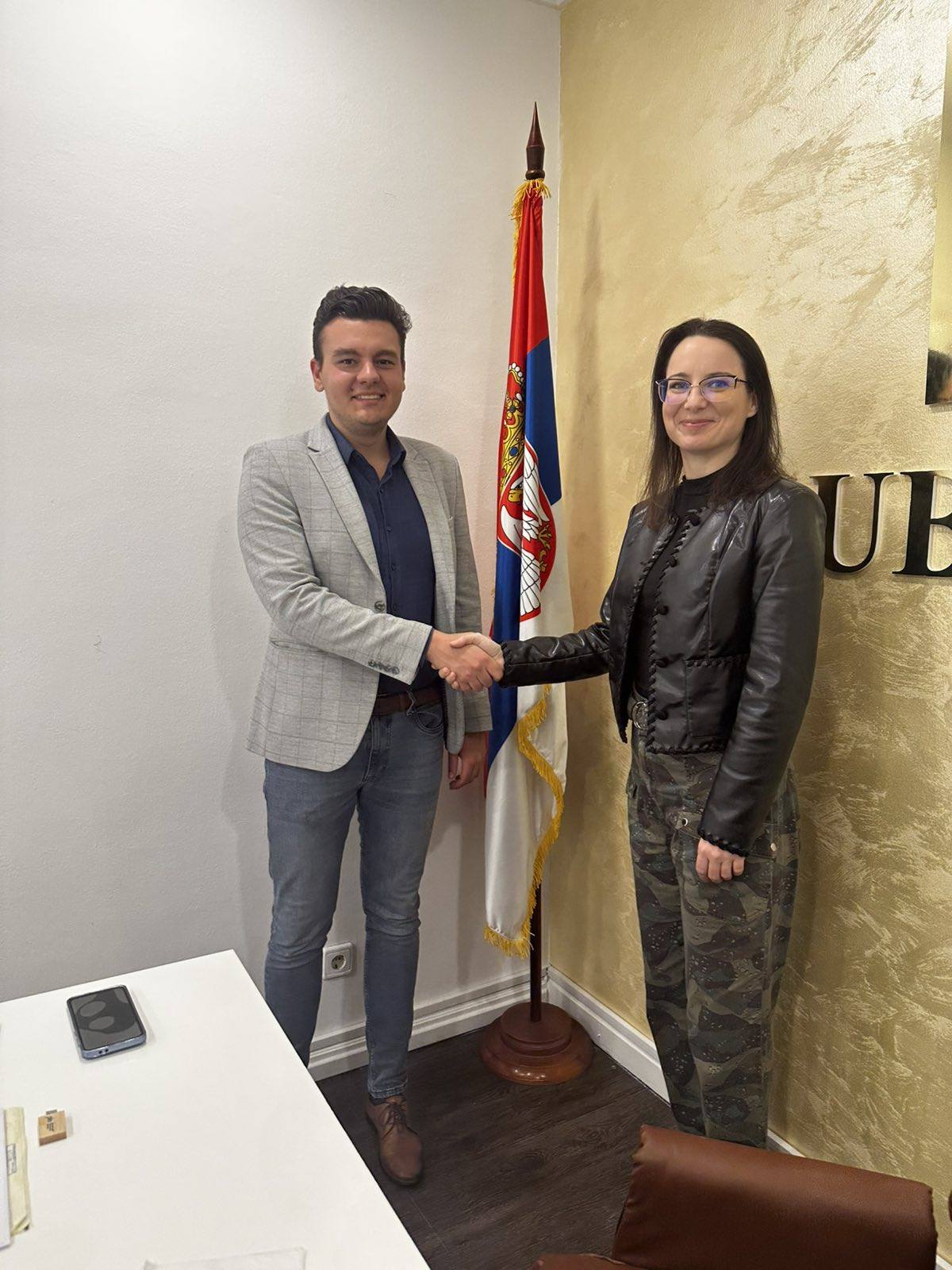
U SUSB ZAPOČELO PETO EU STAŽIRANJE ZA NEPROLIFERACIJU I RAZORUŽANJE
U Strukovnom udruženju sektora bezbednosti danas je započelo peto stažiranje u okviru programa stažiranja Evropske unije za neproliferaciju i razoružanje. Naš stažista tokom ovog programa je Marko Filipović sa Fakulteta političkih nauka Pročitajte ceo tekst.
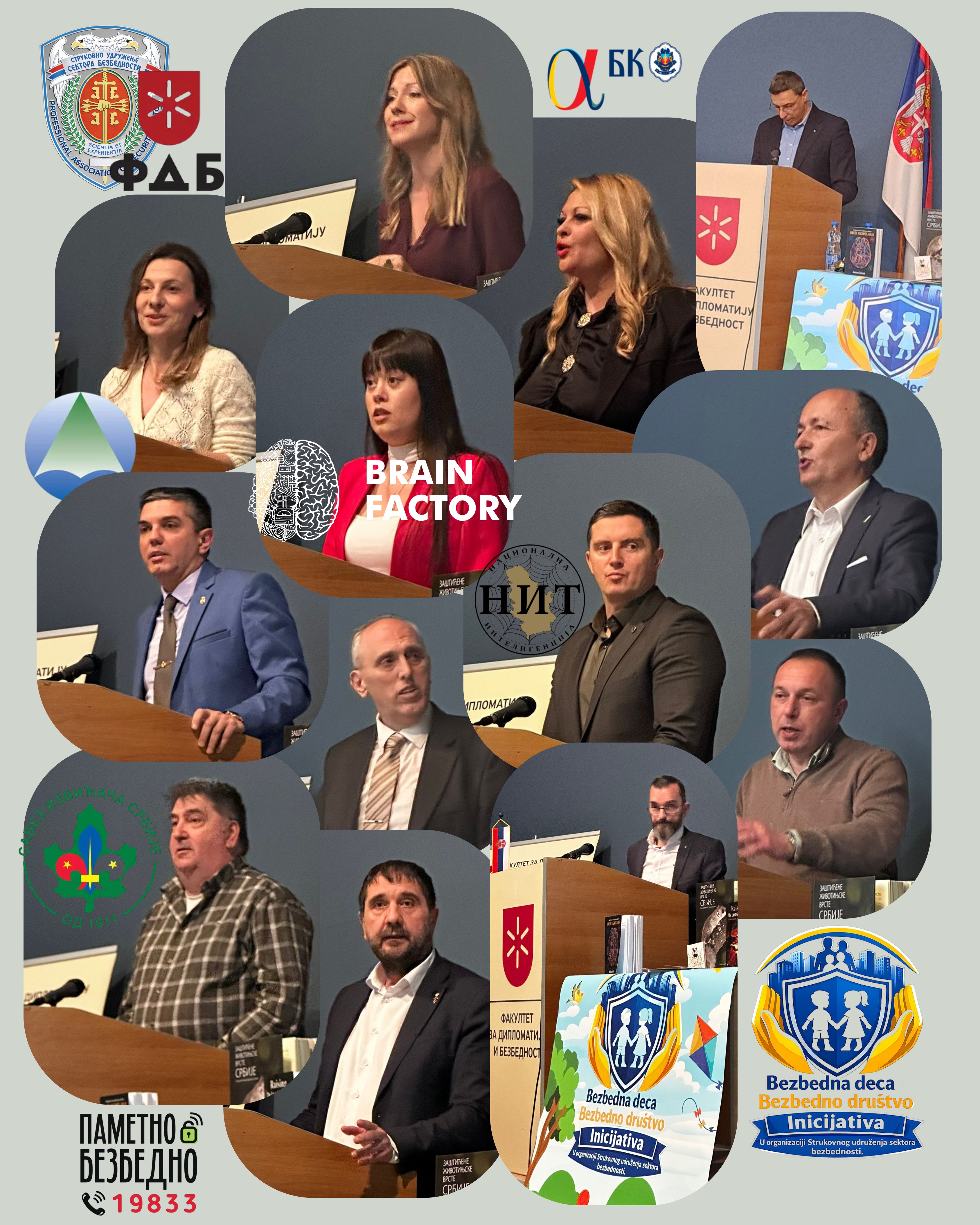
Uspešno realizovana stručna diskusij – Okrugli sto “Izazovi zdrave i bezbedne socoijaliazcije dece”
Dana 25.03.2026. godine na Fakultetu za diplomatiju i bezbednost, kroz Inicijativu „Bezbedna deca / bezbedno društvo“, koju je pokrenulo Strukovno udruženje sektora bezbednosti, uspešno je realizovan treći u nizu stručni okrugli sto. Pročitajte ceo tekst.
III Okrugli sto SUSB-a – “Izazovi zdrave i bezbedne socijalizacije dece” na FDB – 25.mart 2026.godine
Bezbednost dece ne sme da bude tema o kojoj govorimo samo kada se pojavi problem – ona zahteva kontinuiran rad, saradnju i otvoren dijalog svih koji učestvuju u njihovom odrastanju. Nakon dva Pročitajte ceo tekst.
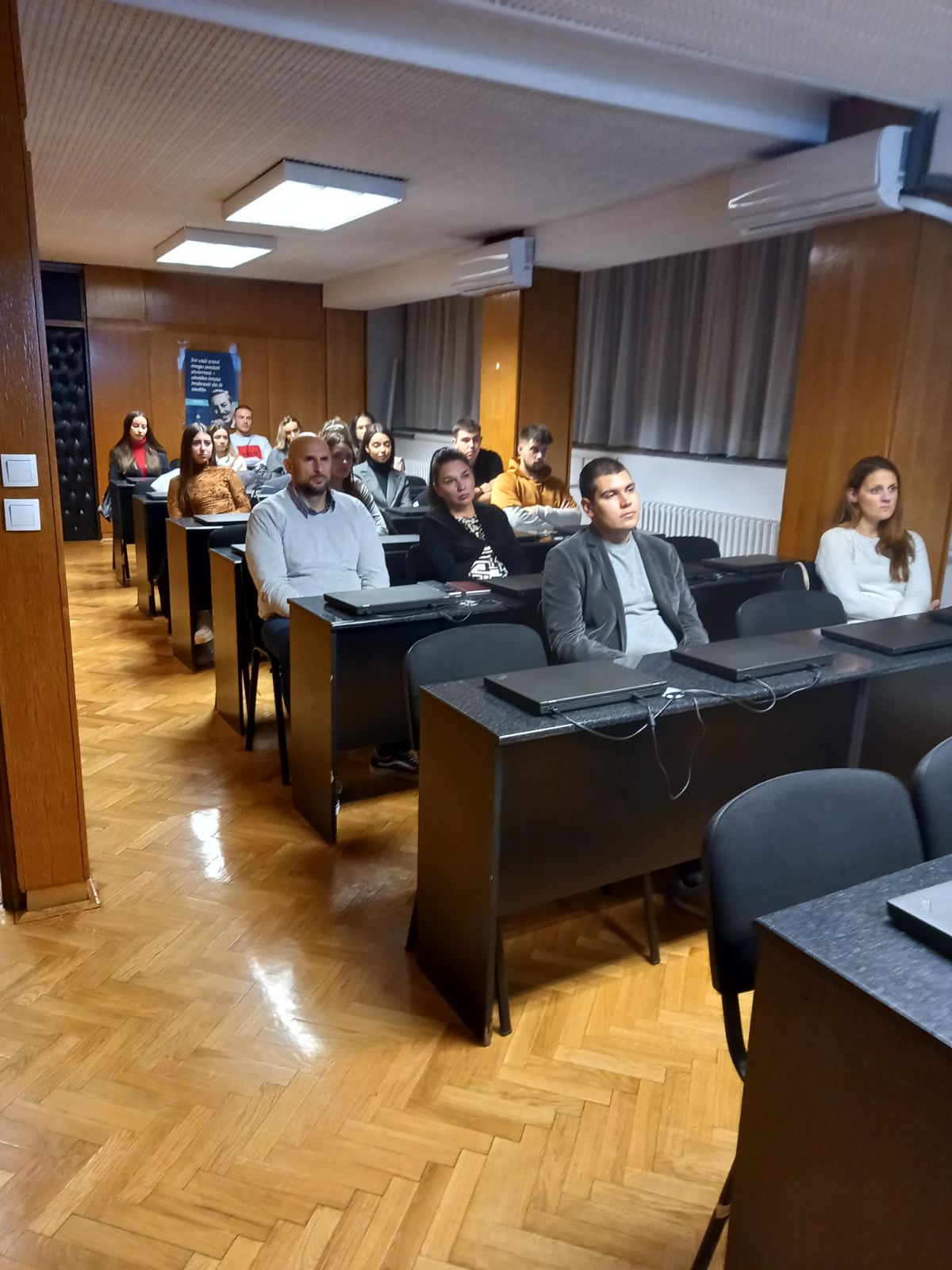
OBAVEŠTENJE O ODLAGANJU REDOVNOG GODIŠNJEG STAŽIRANJA U SUSB
Obaveštavamo sve zainteresovane, naše drage prijatelje i studente, da se redovno godišnje stažiranje za šestu generaciju stažista Strukovnog udruženja sektora bezbednosti neće održati u uobičajnom terminu u novembru 2025. godine, usled kasnijeg Pročitajte ceo tekst.
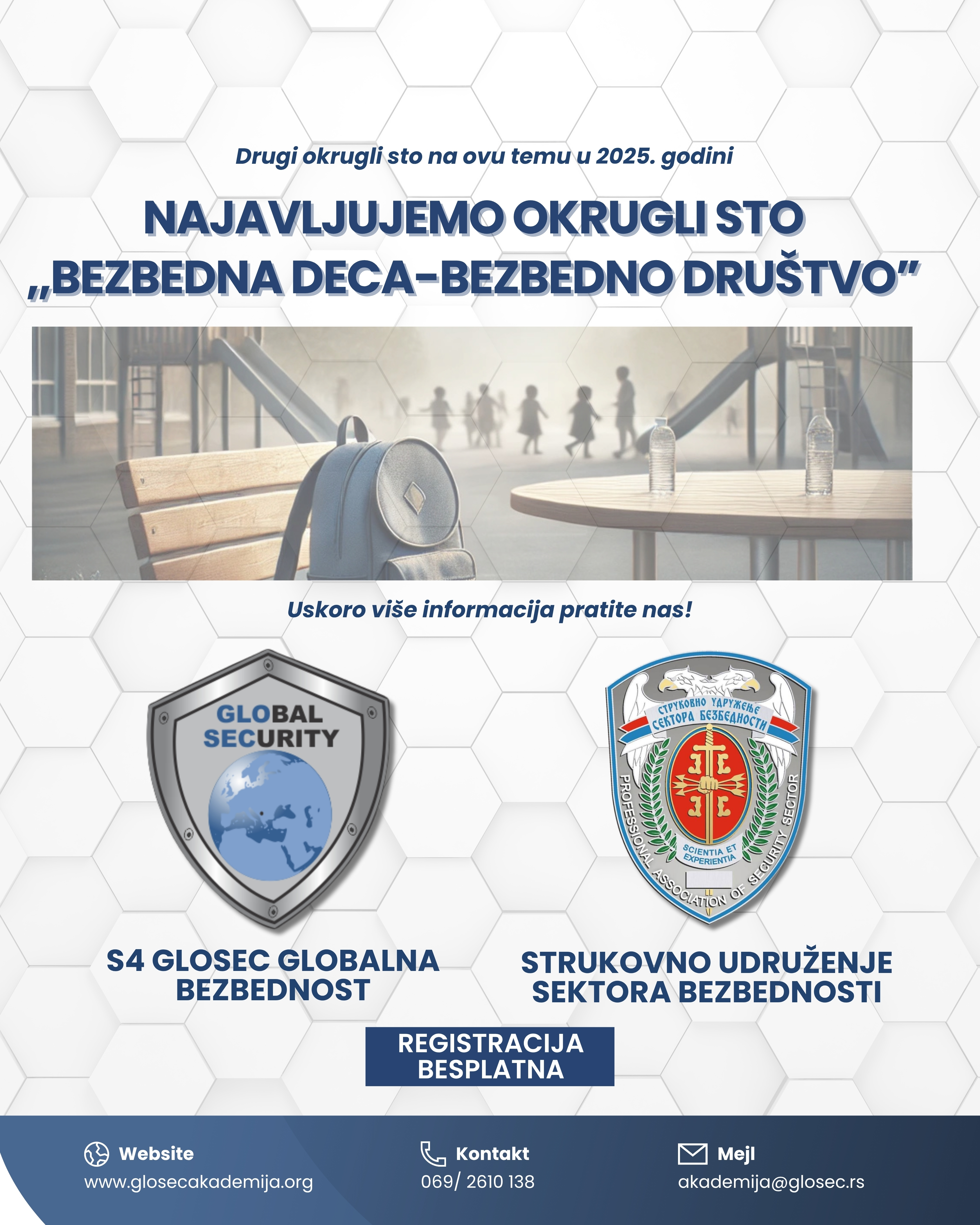
NAJAVLJUJEMO ODRŽAVANJE NAŠEG 2. STRUČNOG SKUPA SA TEMOM – “BEZBEDNA DECA – BEZBEDNO DRUŠTVO”
Nastavljamo našu inicijativu za koju su nas podržali naši partneri i pozivamo sve pojedince i organizacije iz šire stručne javnosti i praktičare iz profesija koje imaju interesa u ovoj temi. Skup Pročitajte ceo tekst.
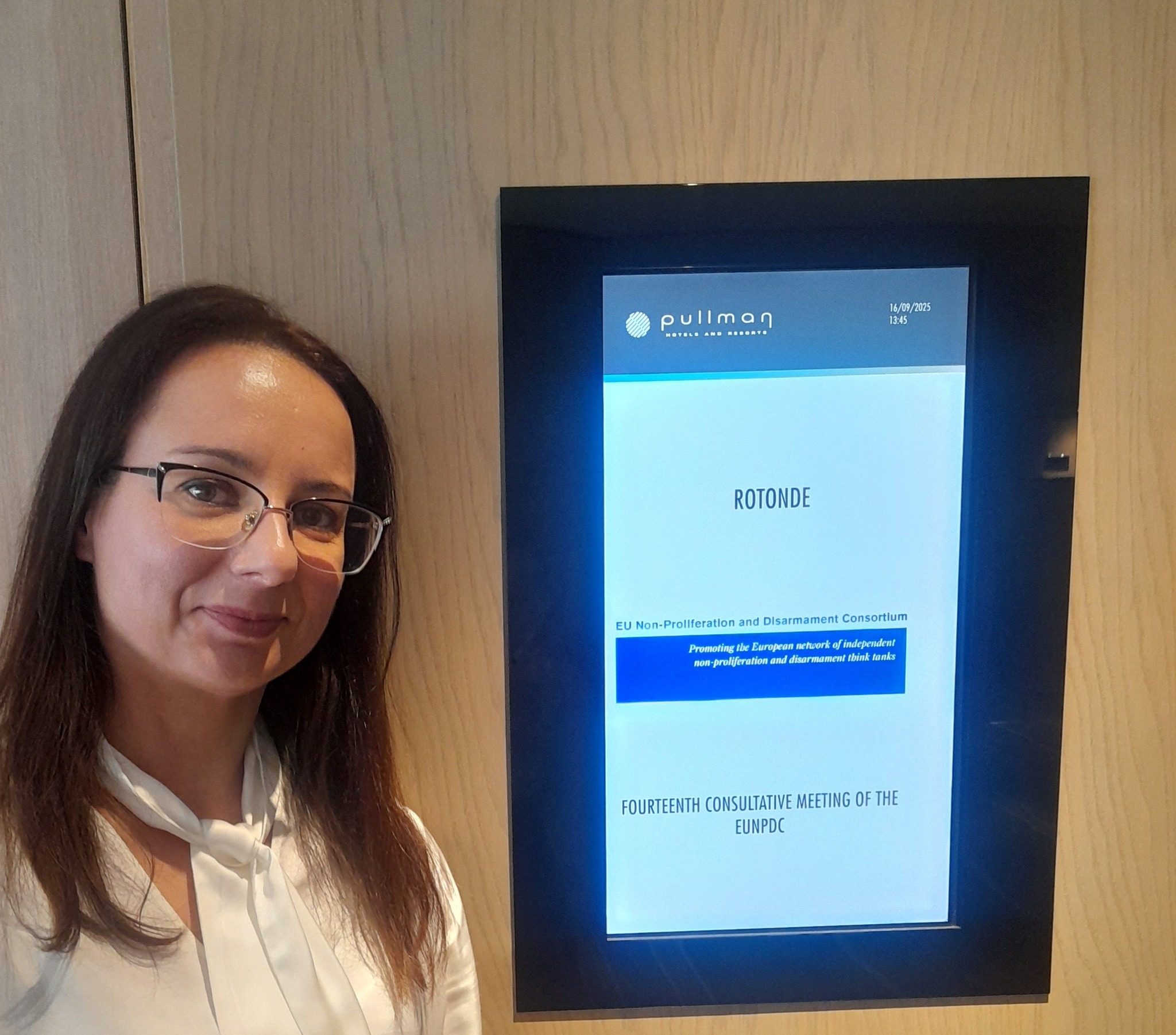
UČEŠĆE NA 14. SAVETODAVNOM SASTANKU KONZORCIJUMA EU ZA NEPROLIFERACIJU I RAZORUŽANjE
Generalni sekretar i rukovodilac Centra za neproliferaciju, kontrolu naoružanja i razoružanje Strukovnog udruženja sektora bezbednosti dr Marina Kostić Šulejić učestvovala je 16. septembra 2025. godine na Četrnaestom savetodavnom sastanku Konzorcijuma EU za Pročitajte ceo tekst.

U SUSB TREĆI PUT OBELEŽEN DAN BORBE PROTIV NASILJA, KRIMINALA I MANIPULACIJE
U Strukovnom udruženju sektora bezbednosti treći put je obeležen 1. septembar kao Dan borbe protiv nasilja, kriminala i manipulacije. Sastanak je okupio i alimniste SUSB a glavna tema skupa bila je Pročitajte ceo tekst.

SUSB SE PRIDRUŽILO MEĐUNARODNOM POZIVU NA AKCIJU ZA ZAUSTAVLJANJE I PREOKRETANJE TRKE U NUKLEARNOM NAORUŽANJU
Strukovno udruženje sektora bezbednosti se 23. jula 2025. godine pridružilo pozivu velikog broja organizacija civilnog društva, bivših vladinih funkcionera, vodećih akademika i stručnjaka, na hitnu akciju kako bi se zaustavila i preokrenula Pročitajte ceo tekst.

NAORUŽAVANJE NEMAČKE – VOL. 3
Autor: Mile Obrenović Kraj Prvog svetskog rata je za Nemačku označio početak nametnute demilitarizacije od strane pobedničkih sila, kako bi se sprečilo da Nemačka opet bude u stanju da ponovo započne rat Pročitajte ceo tekst.
ANALIZA: PRETEĆI I VRLO MOGUĆI, ORUŽANI SUKOB INDIJE I PAKISTANA
AUTOR: Miroslav Vukas, Mast.polit.spec.za bezbednost, borbu protiv terorizma i organizovanog kriminala, dipl.ecc U tekstu analize potencijalnog ratnog sukoba, aktuelnog ovih dana između indije i pakistana, autor u tekstu sopstvenog viđenja i razvoja Pročitajte ceo tekst.

USPEŠNO REALIZOVAN ČETVRTI PROGRAM STAŽIRANJA EU ZA NEPROLIFERACIJU
U Centru za neproliferaciju, kontrolu naoružanja i razoružanje Strukovnog udruženja sektora bezbednosti uspešno je realizovan četvrti program Stažiranja EU za neproliferaciju i razoružanje. Stažista EU stažiranja je bio dr Miad Pročitajte ceo tekst.

JAVNO PITANjE STRUKE I PROFESIJE O PROJEKTU „BEOGRADSKA SLUŽBA BEZBEDNOSTI“
Strukovno udruženje sektora bezbednosti (SUSB) obraća se javnosti i skupštinskim odborima nadležnim za bezbednost povodom najavljenog osnivanja Beogradske službe bezbednosti – projekta koji je predstavio gradonačelnik Beograda, gospodin Aleksandar Šapić, u decembru Pročitajte ceo tekst.

ŠTA SE SVE KRIJE IZA DOGOVORA HRVATSKE, ALBANIJE I KOSOVA O ODBRAMBENOJ SARADNJI OD 19.3.2025.
Autor: dr Marina Kostić Šulejić ŠTA SE SVE KRIJE IZA DOGOVORA HRVATSKE, ALBANIJE I KOSOVA O ODBRAMBENOJ SARADNJI OD 19.3.2025.? Zajednička izjava o odbrambenoj saradnji Hrvatske, Austrije i Kosova (HAK) potpisana je Pročitajte ceo tekst.
SAOPŠTENJE ZA JAVNOST !!!
Strukovno udruženje sektora bezbednosti je nestranačka, apolitična, neprofitna, nevladina, strukovna / profesionalna organizacija koja okuplja eksperte, aktivne i penzionisane profesionalce iz različitih oblasti bezbednosti i u vezi sa bezbednošću u javnom i Pročitajte ceo tekst.

SUSB & 4S GloSec uspešno završili prvu u nizu stučnih diskusija – “Bezbedna deca – Bezbedno društvo”
Strukovno udruženje sektora bezbednosti i 4S Globalna bezbednost su dana 12. februara-2025.godine u prostorijma “4S GloSec”, vrlo uspešno realizvali prvu od mnogih u nizu planiranih stručnih diskusija sa nazivom “Bezbedna deca – Pročitajte ceo tekst.

U SUSB ZAVRŠEN TREĆI PROGRAM STAŽIRANJA EU ZA NEPROLIFERACIJU I RAZORUŽANJE
U petak, 31. januara 2025. godine završen je treći program stažiranja Evropske unije za neproliferaciju i razoružanje koji se u prethodna tri meseca održavao u našem Udruženju. Program je završila dr Pročitajte ceo tekst.

U SUSB ZAPOČET ČETVRTI PROGRAM STAŽIRANJA EU ZA NEPROLIFERACIJU I RAZORUŽANJE
U SUSB je započet četvrti Program stažiranja EU za neproliferaciju i razoružanje. Stažista u našem Udruženju koji će proći kroz program stažiranja je dr Miad Nakhavali koji će se baviti Pročitajte ceo tekst.

Dodeljena nagrada SUSB-a “Mlade žene u nauci o međunarodnim odnosima” za 2024. godinu
Po drugi put smo dodelili i nagradu “Mlade žene u nauci o međunarodnim odnosima”, koja se dodeljuje u okviru naše Balkanske mreže akademskih istraživača, a dobitnica je msr Ivana Dunjić, istraživač-pripravnik u Pročitajte ceo tekst.

Dodela sertifikata petoj generaciji stažista SUSB
Dodelili smo sertifikate našoj Petoj generaciji stažista. Bilo je zadovoljstvo slušati izlaganja na teme koje su obradili tokom stažiranja, a njihovi radovi naći će se uskoro u našem Zborniku radova. Pročitajte ceo tekst.

NAJAVA OKRUGLOG STOLA : “BEZBEDNA DECA – BEZBEDNO DRUŠTVO”
Najavljujemo okrugli sto „Bezbedna deca – bezbedno društvo“, koji će se održati: 📅 12. februar 2025. godine 🕔 17:00–19:30 📍 Baštovanska 1/6, Beograd, GloSec akademija OKRUGLI STO ,,BEZBEDNA DECA – BEZBEDNO Pročitajte ceo tekst.

ODRŽANO PREDAVANJE O REŽIMU NEPROLIFERACIJE
U okviru programa Pete generacije stažista SUSB 3.12.2024. godine održano je predavanje Dr. Leonarda Bandarre, istraživača postdoktorskih studija Univerziteta Duisburg-Esen. Dr. Bandarra je učesnicima skupa predstavio institucionalnu strukturu režima neproliferacije, Pročitajte ceo tekst.

PREDAVANJE O NUKLEARNOM PORETKU UTORAK, 3 DECEMBAR U 15.00, ZOOM
Imamo čast da najavimo predavanje Dr. Leonardo Carvalho Bandarra, istraživača postdoktorskih studija Univerziteta u Duisburgu-Esen, Nemačka, koji će nam govoriti o razumevanju režima neproliferacije – institucija i tehnoloških sposobnosti i predstaviti svoju najnoviju Pročitajte ceo tekst.

ODRŽANO PREDAVANJE NA TEMU SUKOBA NA BLISKOM ISTOKU I ENERGETSKOJ BEZBEDNOSTI
U okviru Pete generacije stažiranja u Strukovnom udruženju sektora bezbednosti održano je predavanje na temu sukoba na Bliskom istoku i energetskoj bezbednosti, pre svega u odnosu na izazove uključivanja nuklearne energije u Pročitajte ceo tekst.

ODRŽANO PREDAVANJE O DRONOVIMA I VOJNICIMA
U okviru Pete generacije stažista Strukovnog udruženja sektora bezbednosti u utorak, 26.11.2024. godine dr Srđan Korać je održao predavanje na temu “Dronovi i vojnici: Da li napredne tehnologije demitologizuju borbeno iskustvo?” Pročitajte ceo tekst.

REALIZOVAN PROJEKAT O MEDIJSKOJ PISMENOSTI I BORBI PROTIV DEZINFORMACIJA
Strukovno udruženje sektora bezbednosti je u četvrtak, 21. novembra 2021. godine realizovalo skup o medijskoj pismenosti i borbi protiv dezinformacija o Evropskoj uniji. Skup je realizovan u okviru istoimenog projekta koji podržava Pročitajte ceo tekst.

ODRŽANO PREDAVANJE O BEZBEDNOSNOJ I ODBRAMBENOJ POLITICI SJEDINJENIH AMERIČKIH DRŽAVA
U okviru Pete generacije stažiranja u SUSB u ponedeljak, 25. novembra 2024. godine održano je predavanje na temu bezbednosne i odbrambene politike Sjedinjenih Američkih Država. Predavanje je održao Džon Kapelo, bivši izaslanik Pročitajte ceo tekst.

REALIZOVANO PREDAVANJE O NUKLEARNOJ ENERGIJI I BOMBI U OKVIRU PETE GENERACIJE STAŽIRANJA
U ponedeljak, 18. novembra 2024. godine održano je drugo po redu predavanje koje se održava u okviru Pete generacije stažiranja u SUSB. Predavanje o nuklearnoj energiji i nuklearnoj bombi održao Pročitajte ceo tekst.

ODRŽAN SKUP O DIPLOMATIJI I OBAVEŠTAJNOM RADU U OKVIRU PETE GENERACIJE STAŽISTA SUSB
U petak, 15. novembra 2024. godine održan je prvi skup u okviru Pete generacije stažista SUSB. Skup je okupio aktuelne stažiste SUSB dok su predavači bili Dušan Spasojević, Pročitajte ceo tekst.

DR. MARINA KOSTIĆ ŠULEJIĆ UČESTVOVALA NA GODIŠNJOJ KONFERENCIJI KONZORCIJUMA EU ZA NEPROLIFERACIJU I RAZORUŽANJE 2024
Dr. Marina Kostić Šulejić, generalni sekretar i rukovodilac Centra za neproliferaciju, kontrolu naoružanja i razoružanje SUSB, učestvovala je od 12. do 14. novembra 2024. godine na redovnoj Godišnjoj konferenciji Konzorcijuma Evropske unije Pročitajte ceo tekst.

SPECIJALNA BANKARSKA PONUDA ZA SVE ČLANOVE I SARADNIKE SUSB-A
Specijalni paket ponuda OTP banke mogu koristiti svi tipovi članstva SUSB-a koji su zaposleni u državnom i privatnom sektoru bezbednosti i naučno-istraživačkim institutima, ali i penzioneri uz posebne uslove. Poseban tretman imaju Pročitajte ceo tekst.

SUSB ZAPOČEO PETI CIKLUS STAŽIRANJA
Strukovno udruženje sektora bezbednosti je u četvrtak, 7. novembra 2024. godine, započelo Peti ciklus stažiranja. Četrnaest studenata osnovnih akademskih, master i doktorskih studija sa Fakulteta političkih nauka, Fakulteta bezbednosti, Pravnog fakulteta Univerziteta Pročitajte ceo tekst.

SUSB REALIZUJE TREĆE STAŽIRANJE EU ZA NEPROLIFERACIJU I RAZORUŽANJE
U Centru za neproliferaciju, kontrolu naoružanja i razoružanje Strukovnog udruženja sektora bezbednosti 04.11.2024.godine je započelo novo stažiranje o neproliferaciji i razoružanju koje podržava Evropska unija. Ovo je treće ovakvo stažiranje, nakon Pročitajte ceo tekst.
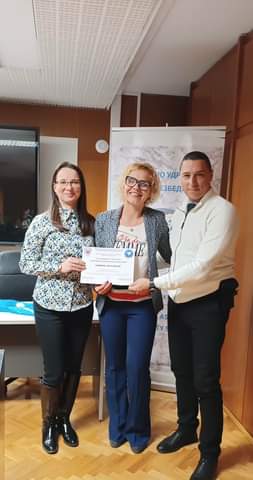
OPEN CALL FOR THE 2024 AWARD YOUNG WOMEN IN INTERNATIONAL RELATIONS SCIENCE
The Call for applications for the YOUNG WOMEN IN INTERNATIONAL RELATIONS SCIENCE AWARD is now open and lasts until 30 November 2024. To apply, send a CV and a short research Pročitajte ceo tekst.

KONKURS ZA STAŽIRANJE U STRUKOVNOM UDRUŽENJU SEKTORA BEZBEDNOSTI
Strukovno udruženje sektora bezbednosti (SUSB) poziva studente svih nivoa studija da se prijave na konkurs za petu generaciju stažista. Prijava se vrši slanjem biografije i motivacionog pisma na mail security.sector.ngo.gs@zoho.com do Pročitajte ceo tekst.

SUSB UČESTVOVALO NA X MEĐUNARODNOM FORUMU „BEZBEDNOST ZA BUDUĆNOST 2024“ – S4 GLOSEC
Strukovno udruženje sektora bezbednosti je imalo čast da učestvuje na X Međunarodnom forumu „Bezbednost za budućnost 2024“, organizacije i S4 GLOSEC i Regionalne Asocijacije za Bezbednost i Krizni Menadžment Pročitajte ceo tekst.

SUSB UČESTVOVALO KAO PARTNERSKA ORGANIZACIJA U REALIZACIJI PROJEKTA “IZGRADNJA KAPACITETA ZA MEDIJSKU PISMENOST U BORBI PROTIV ŠIRENJA LAŽNIH INFORMACIJA”
Strukovno udruženje sektora bezbednosti (SUSB) je kao partnerska organizacija učestvovalo u realizaciji projekta pod koordinacijom crnogorskog Alfa centra, a koji je odobren od strane Međunarodnog višegradskog fonda, upućivanjem učesnika na Letnju školu Pročitajte ceo tekst.

OBELEŽEN DAN BORBE PROTIV NASILJA I ODRŽAN PRVI SKUP ALUMNISTA SUSB
Strukovno udruženje sektora bezbednosti je 2. septembra 2024. godine obeležilo Dan borbe protiv nasilja, kriminala i manipulacije na Visokoj školi strukovnih studija – EDUKA. Dan je prvi put uspostavljen u septembru Pročitajte ceo tekst.

Rukovodilac Centra za NKNiR učetvovala na skupu u Podgorici
Rukovodilac Centra za neproliferaciju, kontrolu naoružanja i razoružanje SUSB dr Marina Kostić Šulejić učestvovala je 28. i 29. maja 2024. godine u Podgorici na skupu posvećenom unapređenom konvencionalnom naoružanju i neproliferaciji oružja Pročitajte ceo tekst.

Godinu dana posle stravičnih događaja u Beogradu i okolini Mladenovca i dalje se pitamo…?
Šta nam je potrebno kao društvu za bolju bezbednost dece i mladih? Godinu dana nakon stravičnih događaja u Beogradu i okolini Mladenovca , kao i ekspanziji negativnih devijantnih i uznemirujućih ponašanja Pročitajte ceo tekst.
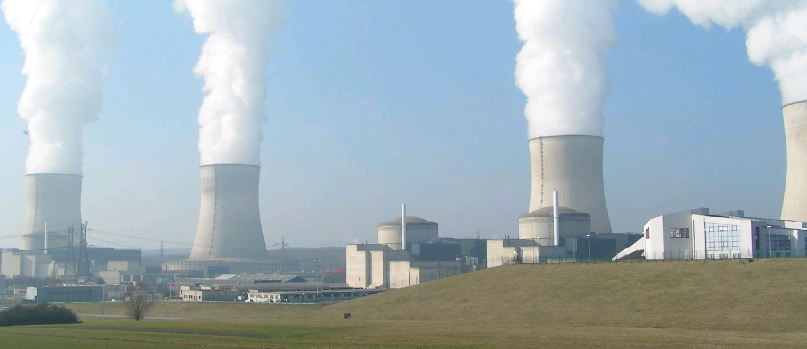
SAOPŠTENJE ZA JAVNOST CENTRA ZA NEPROLIFERACIJU, KONTROLU NAORUŽANJA I RAZORUŽANJE SUSB POVODOM NAJAVA O UKIDANJU ZAKONA O ZABRANI IZGRADNJE NUKLEARNIH ELEKTRANA U SRBIJI
Povodom namere uvođenja nuklearne energije u Srbiji, Centar za neproliferaciju, kontrolu naoružanja i razoružanje SUSB poziva rukovodstvo Srbije da: Obavesti javnost o tačnom sadržaju Memoranduma o razumevanju sa Francuskom elektroprivredom, uključujući Pročitajte ceo tekst.
Category Archives: Aktuelno
ŠTA SE SVE KRIJE IZA DOGOVORA HRVATSKE, ALBANIJE I KOSOVA O ODBRAMBENOJ SARADNJI OD 19.3.2025.
Autor: dr Marina Kostić Šulejić
ŠTA SE SVE KRIJE IZA DOGOVORA HRVATSKE, ALBANIJE I KOSOVA O ODBRAMBENOJ SARADNJI OD 19.3.2025.?
Zajednička izjava o odbrambenoj saradnji Hrvatske, Austrije i Kosova (HAK) potpisana je 19. marta 2025. godine u Tirani. U analizi ovog dogovora polazim od dva razloga: 1. uspostavljanja saradnje jedne EU države (Hrvatske) sa drugom savezničkom zemljom NATO (Albanijom) koja nije članica EU i Kosovom koju Hrvatska i Albanija priznaju kao državu, kako bi pristupili novim evropskim fondovima nastalim u okviru Plana odbrambene spremnosti Evrope 2030 i naoružavanja Evrope i na taj način jačali svoj vojno-industrijski kompleks. I drugo, kao pružanje bezbednosnih garancija Kosovu i podsticanje njegovog članstva u Uniji i NATO, pri čemu se Hrvatska pokazuje kao stub ove saradnje a Srbija kao „imperijalna Rusija“. Takođe, analiza pruža i nekoliko preporuka za Srbiju.
1. Razlozi profita i jačanja vojno-industrijskog kompleksa/odbrambene industrije Hrvatske i Albanije opravdano potrebom usaglašavanja sa Evropskim planom naoružavanja „Spremnost 2030“ (Readiness 2030) i ReArm Europe koji imaju kao opravdanje težnju za postizanjem veće bezbednosti u uslovima dezangožavanja SAD u Evropi, rata sa Rusijom u Ukrajini, strateškog rivalstva sa Kinom i suprotstavljanja „ligi autokratija“ u svetu i drugim izazovima i rizicima.
U svojim Političkim smernicama za narednu Evropsku komisiju 2024-2029 „Evropski izbor“, koje je kandidatkinja za predsednicu nove Evropske komisije Ursula fon der Lajen predstavila Evropskom parlamentu na dan izbora u julu 2024. godine je navedeno sedam prioriteta među kojima je oblast „odbrana i bezbednost“ navedena kao prva prioritetna oblast. Njime je najavljeno i formiranje Evropske odbrambene unije (koja bi blisko sarađivala sa NATO), uvođenje komesara za odbranu u sastav Komisije (to je postao Andreus Kobilus, nekadašnji premijer Litvanije), donošenje Plana („belog papira“) Evropske odbrambene spremnosti 2030 (koji je usvojen 19. marta 2025. godine) i izgradnje Evropskog odbrambenog fonda, koji predviđa ulaganja i u svemirske sisteme ranog upozoravanja kao i ostala četiri domena ratovanja. Ipak, sam dokument započinje delom o novom planu za održivi prosperitet i kompetitivnost Evrope.
„Moramo trošiti više, trošiti bolje, trošiti zaedno“, navodi se u Smernicama. Tri zadatka koja se pri tom navode su: 1. jačanje oružanih snaga država članica, 2. veće investiranje u evropsku odbrambenu industriju, uključujući jačanje Programa evropske odbrambene industrije i stvaranje Jedinstvenog tržišta za proizvode i usluge odbrambene industrije uz povećanje proizvodnje i zajedničke nabavke, 3. povlačenje resursa i suprotstavljanje zajedničkim pretnjama kroz projekte Evropske odbrambene unije poput Evropskog vazdušnog štita i sajber odbrane. Kao obrazloženje predstojeće politike Komisije navodi se uverenje da će „narednih pet godina definisati evropsko mesto u svetu za nerdnih pet decenija“. „One će biti odlučujuće za to da li mi oblikujemo sopstvenu budućnost ili će ona biti oblikovana događajima ili drugima“.
Bez obzira na sve razlike, ono što veže Trumpovu i fon der Lajenovu je pristup načinu rešavanja sporovа koji oboje opisuju kroz kovanicu „mir kroz snagu“ (peace through strength). U toj paradigmi, Evropu bi trebalo maksimalno naoružati kako bi se jednakom snagom suprotstavila autoritarnoj Putinovoj Rusiji, dok bi Ukrajini trebalo dostaviti maksimalno vojne pomoći jer ona „brani evropsku slobodu, demokratiju i vrednosti“. Pri tom u Smernicama se navodi da je „ruski agresivni rat – vođen Putinovom imperijalnom željim da uništi Ukrajinu i njenu evropsku budućnost – (je) deo šireg, sistemskog napada na Evropu, naše vrednosti i na međunarodni poredak zasnovan na pravilima“. Smernice čak uvode i pojam „nove lige autokratija“ u koje svrstava Iran, Severnu Koreju, Rusiju i sve one koji rade na „sejanju podele i stvaraju alternativni međunarodni poredak zasnovan na prekrajanju mapa, imperijalnim idejama i sferama uticaja“. Plan Evropske odbrambene spremnosti 2030 eksplicitno navodi i Kinu kao autoritarnu državu. On navodi da je došlo vreme da se Evropa ponovno naoruža što znači da je potreban „masivni porast u trošenju na evropsku odbranu“. Rat u Ukrajini se predstavlja kao strateški prioritet, egzistencijalno važan za budućnost Evrope koji treba da zaustavi dalje teritorijalno osvajanje Rusije i narušavanje međunarodnog poretka zasnovanog na pravilima, iz čega proizilazi da EU vidi sebe kao entitet u ratu sa „imperijalnom i agresivnom Rusijom“, dok se navodi i da je „Rusija jasno stavila do znanja da po njenom razumevanju ona ostaje u ratu sa Zapadom“. U tom kontekstu razvijen je mehanizam podrške državama u vidu zajmova iz budžeta EU i kroz program Bezbednost i akcija za Evropu (SAFE) koji bi trebalo da podrži značajno povećanje investicija država članica u odbrambene sposobnosti Evrope u naredne dve decenije. On predviđa zajedničke nabavke koje uključuju najmanje dve zemlje, od kojih će jedna biti država članica koja prima SAFE finansijsku pomoć a druga može biti druga država članica, država EFTA, članica EEA ili Ukrajina. Takođe, moguće je učešće i partnerskih zemalja uz ugovor sa Unijom.
Političke smernice nove predsednice Evropske komisije navode da je maksimalno ulaganje u bezbednost Ukrajine ulaganje u bezbednost Evrope, a na umu se posebno ima i učešće u postoknfliktnoj rekonstrukciji Evrope kroz evropske finansijske instrumente. Da li će međutim, produžetak rata u Ukrajini evropskim sredstvima zaista učiniti Ukrajinu sigurnijom ili će u stvari poslužiti za dalje naoružavanje Evrope, profitiranje vojno-industrijsog kompleksa i stvaranje Evropske odbrambene unije? Za sada, strategija „mir kroz snagu“ i stvaranje Evropske odbrambene unije se vidi kao najbolji put ka miru i bezbednosti Evrope koji bi odgovarao evropskim interesima i željenom identitetu kao svetske sile.
Težnje Unije da postane svetska sila će neminovno voditi i željama kreatora evropske politike da jačaju francuske nuklearne snage, iako se nuklearno naoružanje ne pominje za sada u navedenim dokumentima Unije, koje bi se predstavile kao „evropske“ ili kao „evropska dimenzija francuskog odvraćanja“ jer se nuklearno oružje još uvek vidi kao paradigmi moći i statusa svetske sile. Nuklearna energija i oružje postaće vododelnica nove evropske odbrambene politike i članica EU a Francuska i Nemačka se mogu naći na različitim ali i istinim stranama u ovoj podeli. Za sada su bile na različitim, sa Francuskom promoterom nuklearne energije i Nemačkom koja je ugasila svoje nuklearne reaktore. Na istoj se mogu naći ukoliko Nemačka promeni svoju politiku prema nuklearnoj energiji i dodatno produbi odbrambeno savezništvo sa Francuskom na takav način da pristane na deljenje troškova francuskog nuklearnog oružja predstavljenog kao „evropsko“. Bilo kakvo učešće Nemačke u programima nuklearnog naoružanja, pa i kroz deljenje sa Francuskom, je bilo tokom celog Hladnog rata kao i danas potpuno neprihvatljivo za Sjedinjene Američke Države i Sovjetski Savez/Rusiju. Dodatno, kroz strateške snage SAD i nuklearno deljenje NATO i dalje ostaje okvir nuklearnog odvraćanja u Evropi.
Preporuka za Srbiju:
– Aktivno traženje i nalaženja partnera, države članice Evropske unije sa kojom bi Srbija mogla zajednički da konkuriše za projekte jačanja odbrambene industrije uz istovremeno zalaganje za redovne konsultacije unutar mehanizma podregionalne kontrole naoružanja kako bi se održao razuman stepen poverenja država članica odnosno kako region ne bi bio vođen trkom u naoružanju umesto jačanjem evropskih odbrambenih sposobnosti. Najbolji partner za ovo bi bila neka od država EU koja ne priznaje JPN Kosova.
Napomena: Sam Plan odbrambene sposobnosti Unije 2030 ne svrstava Srbiju u države sa sličnom vizijom bezbednosti (like-minded states) sa kojima bi EU trebalo da nastavi uzajamno korisno angažovanje i saradnju u oblasti bezbednosti i odbrane. Tu se navode Albanija, Island, Crna Gora, Moldavija, S. Makedonija i Švajcarska.
– Aktivno promovisanje kontrole naoružanja i uspostavljanja mera poverenja na širem regionalnom prostoru, uz zalaganje za maksimalno poštovanje evropskog poretka zasnovanog na pravilima.
2. Pružanje bezbednosnih garancija Kosovu kada su dovedene u pitanje američke
Kao jedan od glavnih motiva potpisivanja Zajedničke Deklaracije HAK navodi se zaštita teritorijalnog integriteta strana i geopolitička previranja u Evropi. Sam dogovor ima za cilj jačane evropskih i transatlantskih integracija Albanije i Kosova, gde se Hrvatska pojavljuje kao stub ove saradnje. Iskustva dve zemlje i Kosova baziraju se na ratu protiv Srbije i teže da odvrate moguću intervenciju Srbije jačajući na taj način JPN Kosova. Navodna pretnja od Srbije će svakako doprineti većim investicijama EU u odbrambeni sektor Hrvatske, Albanije i Kosova kao država sa sličnim vizijama bezbednosti, kako će se to predstavljati. Mogu se očekivati zajednički projekti HAK u okviru gore navedenih programa naoružavanja Evrope, zajedničke vojne vežbe, treninzi, možda i slanje vojne misije u Ukrajinu u okviru nekog budućeg mirovnog paketa. Saradnja i pomoć će se odvijati kroz obaveštajni sistem, razvoj odbrambene industrije, transfer znanja i iskustava, podele ratnih iskustava, savezničke odnose, bolje pozicioniranje Albanije i Kosova prema NATO i EU.
Preporuka za Srbiju:
– Srbija ne sme dozvoliti jačanje anti-srpskog narativa u Evropi tj. sprovoditi aktivnosti koje bi poslužile drugima da je još više koriste kao izgovor za svoje vojne projekte i nacionalne ambicije, već insistirati na svojoj vojnoj neutralnosti i težnji za članstvom u Uniji kao osnovi spoljnopolitičkih odluka i tražiti partnere unutar EU za aktivnu saradnju u konkurisanju za evropske projekte odbrane. Srbija je deo Evrope i kao takva teži da aktivno doprinosi miru u Evropi.
SAOPŠTENJE ZA JAVNOST !!!
Strukovno udruženje sektora bezbednosti je nestranačka, apolitična, neprofitna, nevladina, strukovna / profesionalna organizacija koja okuplja eksperte, aktivne i penzionisane profesionalce iz različitih oblasti bezbednosti i u vezi sa bezbednošću u javnom i privatnom sektoru bezbednosti kao i akademskoj zajednici.
Naš cilj je podizanje bezbednosne svesti i kulture u društvu, afirmacija profesionalizma i struke, očuvanje istih, nezavisno od bilo kakve politike.
Obzirom da u članstvu udruženja aktivno učestvuju i aktivni pripadnici MUP-a, mi kao udruženje moramo da brinemo i o njima kada izgovaramo svaku javnu reč iz oblasti njihovog delovanja i rada kako ne bismo ugrozili njihovu egzistenciju, radnu obavezu, lično i profesionalno dostojanstvo, a koja i jeste jedna od najosetljivijih profesija u državnom sektoru.
Dakle, SUSB se ograđuje i najoštrije osuđuje svaki pokušaj politizovanja bilo koje teme na polju bezbednosti ili profesije, a posebno policijske profesije koje jeste časna i veoma požrtvovana, a koja je uvek na „vetrometini“ i sklona napadima pojedinih građana, vrlo često od strane „kritičara“ bez osnova i poznavanja materije i prirode policijskog posla.
Naravno, u svakoj profesiji pa i u ovoj, ima „kukolja“ koji treba odvojiti od „žita“, ali to ne daje pravo nikome da generalizuje i pribegava govoru mržnje prema policajcima.
Kada govorimo o aktuelnim dešavanjima, SUSB APELUJE NA SVE činioce u državi i sve učesnike svih javnih okupljanja, DA SE UZDRŽE OD GOVORA MRŽNJE I NASILJA i sve aktivnosti koje god da su, a u skladu su sa zakonom, sprovode MIRNO I BEZ NASILJA I PROVOKACIJA drugih učesnika okupljanja, kao i da se maksimalno uzdrže od napada na policiju, čija je dužnost i obaveza da održavaju javni red i mir, dok je na pravosudnim organima sve dalje i od kojih očekujemo da rade svoj posao u skladu sa zakonom, pravdom i moralom!
SUSB NEĆE KOMENTARISATI ISPOLITIZOVANE SLUČAJEVE I DOGAĐAJE, već apeluje na nadležne državne organe i građane da takvu politizaciju osude i ograde se od nje, prepuštajući struci i profesiji i profesionalcima da rade zakonito, profesionalno, slobodno i bez straha od odmazde od pojedinaca ili grupa iz političkog miljea.

SUSB & 4S GloSec uspešno završili prvu u nizu stučnih diskusija – “Bezbedna deca – Bezbedno društvo”
Strukovno udruženje sektora bezbednosti i 4S Globalna bezbednost su dana 12. februara-2025.godine u prostorijma “4S GloSec”, vrlo uspešno realizvali prvu od mnogih u nizu planiranih stručnih diskusija sa nazivom “Bezbedna deca – bezbedno društvo”.

Uvodni intervju 4S GloSec sa predsednikom SUSB-a Dejanom Milutinovićem. (klikom ovde)
Ideja ovog našeg projekta jeste okupljanje multi-disciplinarne stručne javnosti kojih se tiče ova tema, a sa ciljem da zajedničkim snagama kroz konstruktivnu stručnu diskusiju objasnimo aktuelno bezbednosno stanje tj. probleme sa posebnim akcentom na decu i mlade.
Zašto baš akcenat na decu i mlade? Zbog svoje specifičnosti i karakteristika u njihovom psiho-fizičkom i socijalnom razvoju su i naosetljivije grupe u društvu, te zahtevaju posebnu pažnju i pristup u tome kako faktori socijalizacije utiču na njih i kako se razvijaju tj. u kakve ljude izrastaju te time i kakvo ćemo društvo sutra imati. A koji su to faktori socijalizacije? U osnovi su to : Porodica, vaspitno-obrazovne institucije, vršjačka okolina i društvo. Ovi faktori su u direktnoj korelaciji sa mentalnim zdravljem pojedinca odnosno društva, medijima i društveno-političkoj klimi, kvalitetu tj. profesionalizaciji i stručnosti institucija, kao i vladavini prava što sve na kraju utiče direktno i indirektno na bezbednost društva. Kako vidimo, ovo je izuzetno kompleksna tema i zahteva multi-disciplinarni i mult-sektorski pristup kao i razvijenu društvnu kolektivnu svest odnosno bezbednosnu svest i kulturu. S’obzirom da stručnih diskusija na našim prostorim nije bilo dovoljno ili barem nije bilo dovoljno pažnje (pa oko bilo koje aktuelne teme u društvu), mi kao SUSB smo odlučili da sa našim parterima i ovom prilikom domaćinima iz “4S GloSec” pokrenemo niz stručnih diskusija kako bismo ukazali na bezebednosne probleme u društvu počevši od socijalizacije dece pa do institucionalnih i sistemskih postavki i da damo predloge nekih rešenja.
Na skupu smo pokušali da se dodirenemo svih ključnih oblasti što je samo pokazalo koliko je ova tema zaista široka i kompleksna i zateva više vremena, više govornika i više priče, te smo sada i zaista sa svima prisutnima rešeni da ovu temu zajedno nastavimo vrlo brzo u većem obimu i sa više vremena pozivajući i druge stručnjake i profesionalce iz oblasti kojih se tiče ova tema.
Zbog zaista velikog intersovanja, kako gostiju tako i govornika sledeću stručnu diskusiju planiramo za 26. mart-2025.godine, a mesto održavanja ćemo vam uskoro objaviti ovde na našem sajtu.
Detaljniji izveštaj, ceo video snimak skupa i fotografije sa skupa ćemo uskoro posebno postaviti na našem sajtu i društvenim mrežama i platformama.
Pozivamo svu zainteresovanu stručnu javnost i zaposlene profesionalce da nas prate i pridruže u ovom našem projektu izuzetno važnim za naše društvo danas!
Pratite nas …!


“Društvo je bezebedno onoliko koliko ga mi činimo bezbednim!”
“Ključ bezbednog društva u budućnosti je u zdravoj socijalizaciji dece danas!”
“Bezbednosna svest i kultura su osnov bezbednijeg i sigurnijeg života.”
(Dejan Milutinović, predsednik SUSB)

Iran-Russia Comprehensive Strategic Partnership: Implications and Challenges
Dr. Miad Nakhavali
Founder of Middle East Analitika
The Iran-Russia Comprehensive Strategic Partnership Agreement, comprising a preamble and 47 articles, was officially concluded in Moscow on January 17, 2025—just three days before the inauguration of Donald Trump, a U.S. president known for his firm stance against the Islamic Republic. The timing of the agreement sends a clear and deliberate message to both Washington and its allies, particularly Israel.
While this is not a formal military alliance between Iran and Russia, the agreement places significant emphasis on military and nuclear cooperation, as well as joint deterrence strategies. One of its key provisions ensures that neither party allows its territory to be used by an aggressor to launch attacks against the other. However, it is important to note that, unlike Russia’s agreement with North Korea—where Moscow is obligated to defend Pyongyang unconditionally in the event of war—this partnership with Iran does not include such a binding defense commitment.
Military and Nuclear Cooperation
A major aspect of the agreement is the expansion of military collaboration across multiple levels. This includes organizing workshops, working groups, and other joint activities aimed at deepening defense ties. Furthermore, both parties committed to close cooperation in arms control, disarmament, and non-proliferation within the framework of relevant international treaties. However, the agreement simultaneously underscores a significant escalation in nuclear cooperation, with plans for the joint construction of additional nuclear facilities.
Iran has already played a pivotal role in supplying Russia with Shahed-series drones during the war in Ukraine and has reportedly transferred the necessary technology to allow domestic production on Russian soil. In return, discussions are reportedly underway regarding Russia’s potential provision of advanced fighter aircraft to Iran, including long-range models such as the Su-35 Super Flanker. Additionally, there is speculation about a joint production program, possibly involving air defense interceptors such as the S-400 system. In the long term, such developments would considerably bolster Iran’s defensive capabilities against potential military actions from NATO, the United States, or Israel. This, in turn, could reduce Iran’s perceived need to pursue nuclear weapons as a deterrent.
Political Significance and Strategic Timing
An analysis of Iranian state media indicates that Tehran’s urgency in finalizing the agreement before Trump’s return to office carries significant political weight. The Iranian leadership appears to have sought to preemptively secure stronger ties with Moscow before the U.S. could reintroduce a more aggressive Iran policy. Simultaneously, Iran has been conducting a series of military exercises, particularly air defense drills, signaling its readiness for potential confrontations.
Tensions between Iran and Israel remain high, with Tel Aviv repeatedly asserting that it will not tolerate a nuclear-armed Iran. The timing of this agreement suggests that Tehran aimed to reinforce its strategic posture ahead of any potential escalation under the Trump administration.
Intelligence and Propaganda Coordination
Beyond military cooperation, the agreement outlines plans for intelligence-sharing between Iran and Russia. Additionally, both countries have committed to counteracting what they perceive as Western propaganda within their territories. This suggests that Tehran and Moscow may coordinate efforts to curb Western influence, restrict opposition media, and implement stricter controls on information flow. Such measures could further accelerate their shift toward authoritarian governance, raising concerns over increasing domestic repression and declining political freedoms.
Financial and Economic Implications
Another key component of the agreement is the plan to establish an independent financial and payment system that bypasses the U.S. dollar and the global banking networks controlled by the United States and the European Union. If successful, this initiative could significantly weaken the effectiveness of Western economic sanctions. A broader trend toward de-dollarization could undermine one of the most powerful tools that Washington and Brussels have traditionally used to counter hostile regimes. However, this move also carries risks—it could provoke harsher responses from the U.S. and its allies, potentially increasing the likelihood of direct military confrontation.
Obstacles and Unresolved Disputes
Despite their deepening cooperation, Iran and Russia still face notable disagreements. One major point of contention is the South Caucasus, particularly the dispute between Armenia and Azerbaijan. Moscow supports Baku’s push for the Zangezur Corridor—a project that would effectively cut off Iran’s land connection to Armenia and alter Tehran’s regional access. Iran strongly opposes this initiative, seeing it as a threat to its geopolitical position.
Additionally, tensions persist over the Caspian Sea, where Iran has long expressed dissatisfaction with Russia’s approach to resource distribution. While the agreement emphasizes mutual respect for the equitable use of Caspian resources, Tehran remains wary of Moscow’s dominance in the region.
Conclusion
Despite the existing disagreements between Tehran and Moscow, both regimes appear to be prioritizing their shared objective of countering U.S. influence over their unresolved bilateral disputes. This agreement marks a significant step toward a deeper strategic partnership, one that could shape a long-term alignment aimed at challenging Western dominance in global affairs. However, the ultimate effectiveness of this alliance remains uncertain. It is yet to be seen whether the partnership will serve as a strong enough deterrent to prevent potential military actions by the United States, NATO, or Israel against Iran, particularly concerning its nuclear program.
At the same time, questions persist regarding Russia’s broader strategic calculations. Moscow may seek to leverage its deepening ties with Tehran as a bargaining chip in negotiations with the West over the Ukraine conflict. The extent to which this partnership enhances Russia’s negotiating position—or, conversely, further alienates it from Western powers—remains an open question.
With Donald Trump’s return to the White House, the geopolitical landscape surrounding Iran and Russia is poised to become even more unpredictable. His previous tenure demonstrated an inclination toward abrupt policy shifts, aggressive sanctions, and unconventional diplomatic strategies. Whether Trump will escalate pressure on Iran and Russia or seek a more transactional approach to global diplomacy remains to be seen. Regardless, the evolving dynamics of this partnership are likely to play a critical role in shaping regional and international security in the years to come.
Dodeljena nagrada SUSB-a “Mlade žene u nauci o međunarodnim odnosima” za 2024. godinu
Po drugi put smo dodelili i nagradu “Mlade žene u nauci o međunarodnim odnosima”, koja se dodeljuje u okviru naše Balkanske mreže akademskih istraživača, a dobitnica je msr Ivana Dunjić, istraživač-pripravnik u Institutu za međunarodnu politiku i privredu.

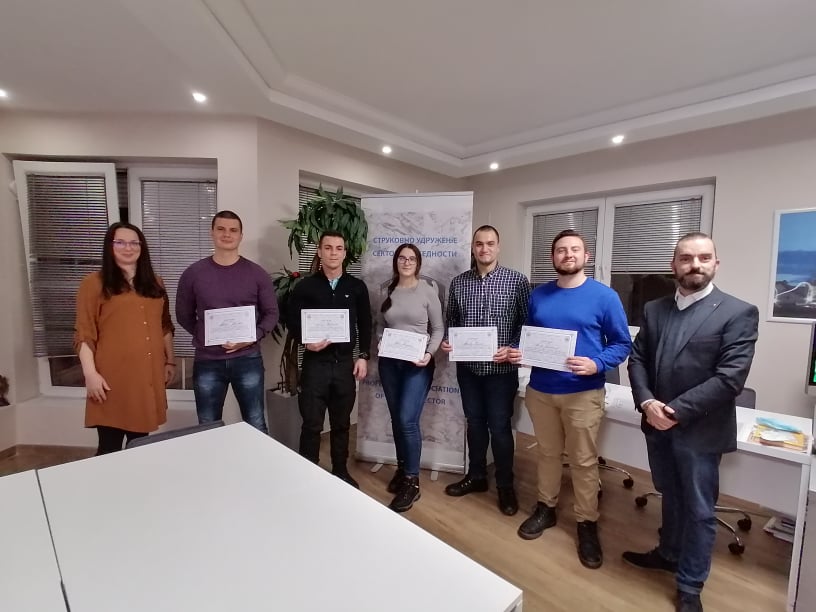
Dodela sertifikata petoj generaciji stažista SUSB
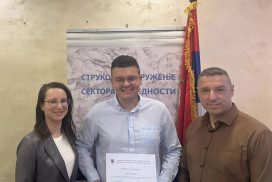
Dodelili smo sertifikate našoj Petoj generaciji stažista.
Bilo je zadovoljstvo slušati izlaganja na teme koje su obradili tokom stažiranja, a njihovi radovi naći će se uskoro u našem Zborniku radova. Još jedno predivno iskustvo sa našim mladim ljudima.

NAJAVA OKRUGLOG STOLA : “BEZBEDNA DECA – BEZBEDNO DRUŠTVO”
Najavljujemo okrugli sto „Bezbedna deca – bezbedno društvo“, koji će se održati:
📅 12. februar 2025. godine
🕔 17:00–19:30
📍 Baštovanska 1/6, Beograd, GloSec akademija
OKRUGLI STO ,,BEZBEDNA DECA – BEZBEDNO DRUŠTVO”
Odlučili smo da godinu započnemo diskusijom o bezbednosti dece, jer verujemo da nijedan drugi korak ne može biti važniji za našu budućnost i bezbednost najmlađih.
Bezbednost dece je temelj svakog zdravog društva. Ona nije samo obaveza roditelja i obrazovno-vaspitinih ustanova, već celokupne zajednice.
Okrugli sto „Bezbedna deca – Bezbedno društvo,“ koji organizuju S4 GloSec Globalna Bezbednost i Strukovno udruženje sektora bezbednosti, okuplja stručnjake, institucije, organizacije i druge relevantne aktere sa jednim ciljem – kreiranjem bezbednog okruženja za najmlađe.
Ovaj događaj, zakazan za 12. februar 2025. godine u Baštovanskoj 1/6 Beogradu (GloSec akademija), već deset godina zauzima važno mesto kao stalni deo programa Međunarodnog foruma „Bezbednost za budućnost“, koji je prošle godine obeležio deceniju postojanja i posvećenosti unapređenju bezbednosti.
Zašto je ova tema važna?
Deca su najosetljiviji deo društva i njihova bezbednost direktno utiče na razvoj zajednice. Prevencija nasilja, zaštita mentalnog zdravlja, digitalna bezbednost, efikasan sistem bezbednosti obrazovno-vaspitne ustanove i krizni menadžment samo su neka od pitanja koja se nameću kao prioriteti. Svedoci smo da su izazovi s kojima se deca danas suočavaju sve kompleksniji, a odgovornost svih nas je da stvorimo okruženje koje ih štiti i podržava.
Ovaj događaj pruža priliku za otvorenu diskusiju i razmenu iskustava među stručnjacima, roditeljima, nastavnicima i predstavnicima institucija. Poseban fokus biće na prepoznavanju problema i formiranju održivih rešenja – od izrade dokumenata kojima se regulišu različite oblasti bezbednosti u obrazovno-vaspitinim ustanovama, edukacije svih učesnika obrazovno-vaspitnog procesa, do jačanja saradnje sa roditeljima i lokalnom zajednicom. Sve ove teme su važne za budućnost našeg društva, a ne samo za obrazovno-vaspitne ustanove.
Fokus na budućnost
Okrugli sto „Bezbedna deca – Bezbedno društvo“ otvara vrata za stratešku diskusiju koje prelaze okvire obrazovno-vaspitnih ustanova. Govori se o koracima koji obuhvataju sve aspekte društva – od uključivanja roditelja i nastavnika, do saradnje s lokalnim vlastima i institucijama. Ključ je u zajedništvu i razmeni znanja.
S4 GloSec Globalna Bezbednost i Strukovno udruženje sektora bezbednosti dokazuju svoj društveno odgovorni pristup kroz dugogodišnji rad na promociji bezbednosti i edukaciji svih aktera. Kroz prethodne aktivnosti, poput obuka, konferencija, foruma, panel diskusija, radionica, seminara i okruglih stolova, pokazali su posvećenost kreiranju održivih rešenja u oblasti bezbednosti.
Ovaj događaj još jednom potvrđuje njihov zajednički cilj – podizanje svesti o bezbednosnoj kulturi, jačanju otpornosti zajednice i stvaranje prostora u kojem se svako dete oseća sigurno.
Pored toga što je prilika za sagledavanje trenutnih izazova, događaj ima i dublji značaj – podizanje svesti javnosti o kritičnim pitanjima koja se tiču bezbednosti dece.
Svako dete zaslužuje pravo na bezbednost, a svako društvo ima obavezu da to pravo osigura.
Pridružite nam se u ovoj važnoj misiji. Bezbedna deca znače bezbedno društvo – danas, sutra i zauvek.

Registrujte se putem e-maila akademija@glosec.rs ili pozivom na broj 069/2610138.
Prijava je besplatna, a broj mesta ograničen, zato rezervišite svoje mesto na vreme!
ODRŽANO PREDAVANJE O REŽIMU NEPROLIFERACIJE

PREDAVANJE O NUKLEARNOM PORETKU UTORAK, 3 DECEMBAR U 15.00, ZOOM

Imamo čast da najavimo predavanje Dr. Leonardo Carvalho Bandarra, istraživača postdoktorskih studija Univerziteta u Duisburgu-Esen, Nemačka, koji će nam govoriti o razumevanju režima neproliferacije – institucija i tehnoloških sposobnosti i predstaviti svoju najnoviju knjigu “Nuclear Latency and the Participation Puzzle: Constructing the International Non-proliferation Regime” i izdanju Palgrave Macmillan.
Radi slanja pristupnih parametara za Zoom zainteresovani učesnici bi trebalo da pošalju prijavu na security.sector.ngo.gs@zoho.com.
ODRŽANO PREDAVANJE NA TEMU SUKOBA NA BLISKOM ISTOKU I ENERGETSKOJ BEZBEDNOSTI

U okviru Pete generacije stažiranja u Strukovnom udruženju sektora bezbednosti održano je predavanje na temu sukoba na Bliskom istoku i energetskoj bezbednosti, pre svega u odnosu na izazove uključivanja nuklearne energije u energetski miks Srbije.
Situaciju na Bliskom istoku prisutnima je izložio dr Miad Nakhavali dok je o energetskoj bezbednosti i sistemu, sa posebnim osvrtom na slučaj Srbije, govorio dr.ing. Miroslav Parović.